Why SEO Correlation Data Matters More Than You Think for Rankings
@theseocorrelationdatadeck
October 26, 2026 · 8 min read
For years I treated SEO correlation data like a guilty pleasure. I dug through studies from Moz, Ahrefs, and Search Engine Land, looked at the charts, nodded at the takeaways, and then went back to optimizing pages the way I always had. It felt useful in theory but disconnected from the messy reality of ranking a real site. Then I ran a few actual SEO experiments for a client in a competitive niche, and my perspective shifted hard.
Correlation analysis, when it is done right, does not give you a recipe. It gives you a clue. The trick is learning how to read that clue without mistaking it for proof. That nuance is what separates a good SEO strategy from spreadsheet noise.
What SEO Correlation Data Actually Tells You
At its simplest, correlation data shows whether two things move together. A classic example: sites with more backlinks tend to rank higher. But that does not mean building more backlinks causes higher rankings. It could mean high-quality content attracts both links and rankings independently. It could mean Google uses PageRank in ways that reward link velocity for certain queries. The correlation is a signal, not a verdict.
When I first started paying close attention to these numbers, I found myself chasing metrics instead of causes. I saw strong correlation between keyword difficulty and organic traffic and assumed that targeting low difficulty keywords was always the right move. That assumption cost me months on a content strategy that worked for volume but never for conversions. The real lesson was that search intent mattered far more than the correlation number suggested.
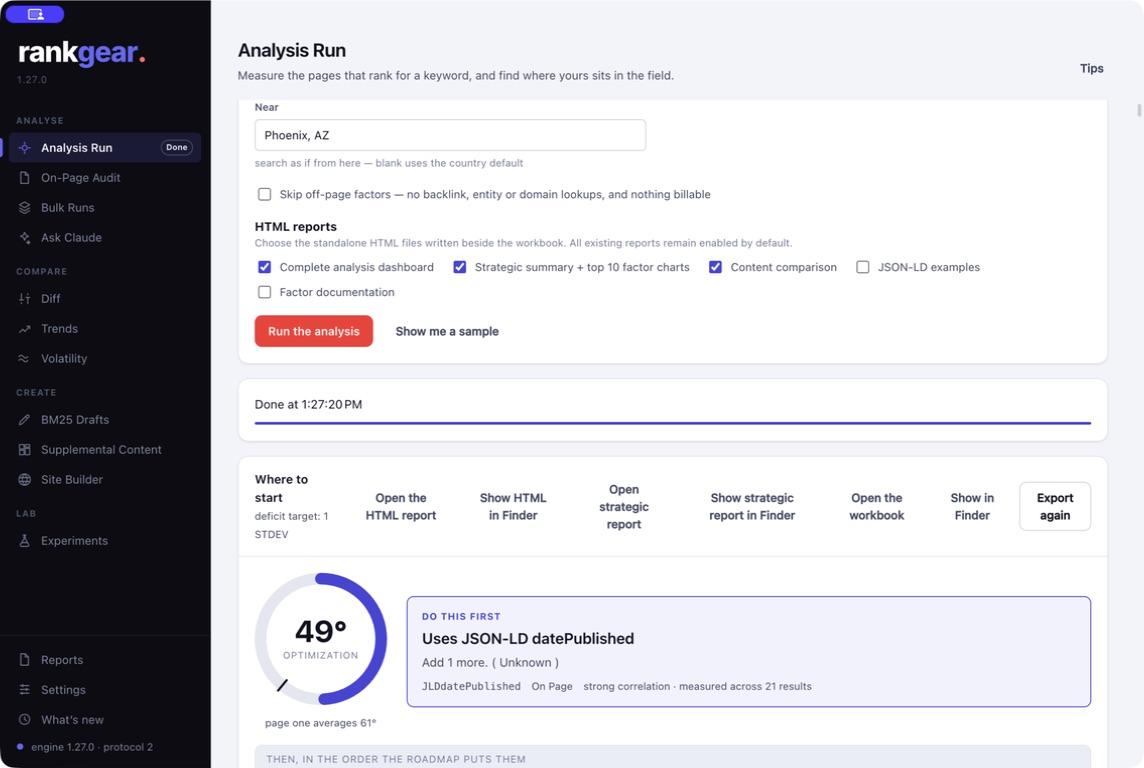
This is where tools like RankGear become valuable. They do not just give you a list of ranking factors and their correlation scores. They let you analyze those factors for a specific query, so you can see whether backlinks, content length, or Core Web Vitals matter most for your actual target terms. That shift from general correlation to query-level analysis changed how I prioritize work.
Reading Correlation Data With a Skeptical Eye
One of the biggest mistakes I see in our industry is treating correlation as causation. A study finds a strong link between page speed and rankings. Suddenly everyone is obsessed with Lighthouse scores. But Google has been clear that speed is a factor, not the factor. Correlation data can amplify that distortion if you do not account for the rest of the system.
Take RankBrain, Google's machine learning component for search results. It interprets queries and measures user satisfaction in ways that static ranking signals cannot capture. A page might have perfect Core Web Vitals, a strong backlink profile, and spotless on-page SEO. If RankBrain detects that searchers bounce after one second, that page will drop. Correlation data that ignores engagement signals will tell you speed matters more than it does in isolation.
I learned this the hard way with a site that ranked well for dozens of terms. The correlation data showed no issues with technical SEO. But organic traffic started slipping. When I dug into Google Search Console, the real problem was search intent mismatch. The pages satisfied the algorithm but not the searcher. Machine learning models like RankBrain penalized that gap over time.
Turning Correlation Into Action
The most practical use of SEO correlation data is to guide your experiments, not to replace them. If a correlation analysis suggests that topic clusters correlate strongly with higher rankings in your niche, you can test that hypothesis. Build a cluster, measure the results, and see if the correlation holds for your domain. If it does, you have found a pattern worth scaling. If it does not, you saved yourself from copying a strategy that worked for someone else.
I use a simple framework now. First, I run a correlation analysis on the specific query set I care about. That gives me a shortlist of ranking factors to investigate. Then I cross-reference those factors with what I know about the searcher's intent. If backlinks show high correlation but the search intent is informational, I focus on content depth and expert citations rather than link building. If SERP features like featured snippets dominate the results, I optimize for those directly instead of chasing link metrics.
This approach keeps me from wasting time on generic best practices. It also surfaces opportunities that broad studies miss. For example, I once found that pages with a specific internal linking structure consistently outperformed similar pages in the same content gap analysis. The correlation data flagged it, and a quick experiment confirmed it. That insight alone lifted organic traffic by 40% for that section of the site.
Where the Industry Gets Correlation Wrong
A lot of public SEO correlation data comes from large-scale studies that average across thousands of queries. Those numbers are useful for understanding broad trends, but they are dangerous if you apply them blindly to a single niche. A correlation that holds for affiliate sites might be meaningless for local service businesses or e-commerce product pages. The same ranking factors behave differently depending on competition, user intent, and Google's current algorithm adjustments.
I have seen people abandon perfectly good content because a correlation study said pages with fewer than 2,000 words rarely rank. The real problem was that their content did not match search intent, not the word count. The correlation was a distraction. When you rely on aggregate data without validating it against your own context, you end up optimizing for averages instead of results.
Another common pitfall is ignoring the time dimension. Correlation snapshots miss how ranking factors evolve. Google updates, competitor behavior, and changes in user behavior all shift the landscape. A factor that correlated strongly with rankings six months ago may have weakened or reversed. That is why ongoing SEO experiments matter more than one-time analysis.
Practical Ways to Use SEO Correlation Data Today
If you want to get more out of this data, start with a clear question. Do not just look at a list of ranking factors. Ask yourself what signal you want to test. Then pick a small set of pages, measure the factor you care about, and compare their performance. The data becomes a hypothesis generator, not a report card.
- Run a content gap analysis on your top competitors. Look for topics they cover that you do not. Then check whether correlation data shows those topics linking to strong organic traffic in your niche.
- Cross-reference keyword difficulty scores with actual ranking movement for your domain. Difficulty is a correlation-based metric, and it can mislead if you do not account for your site's authority.
- Use correlation analysis to prioritize technical fixes. If Core Web Vitals show high correlation for your query set, invest in speed optimization first. If not, move it lower on the list.
Each of these steps keeps the data grounded in your real situation. You are not following a template. You are testing a pattern and deciding whether it applies to you.
The Role of Tools Like RankGear in Correlation Work
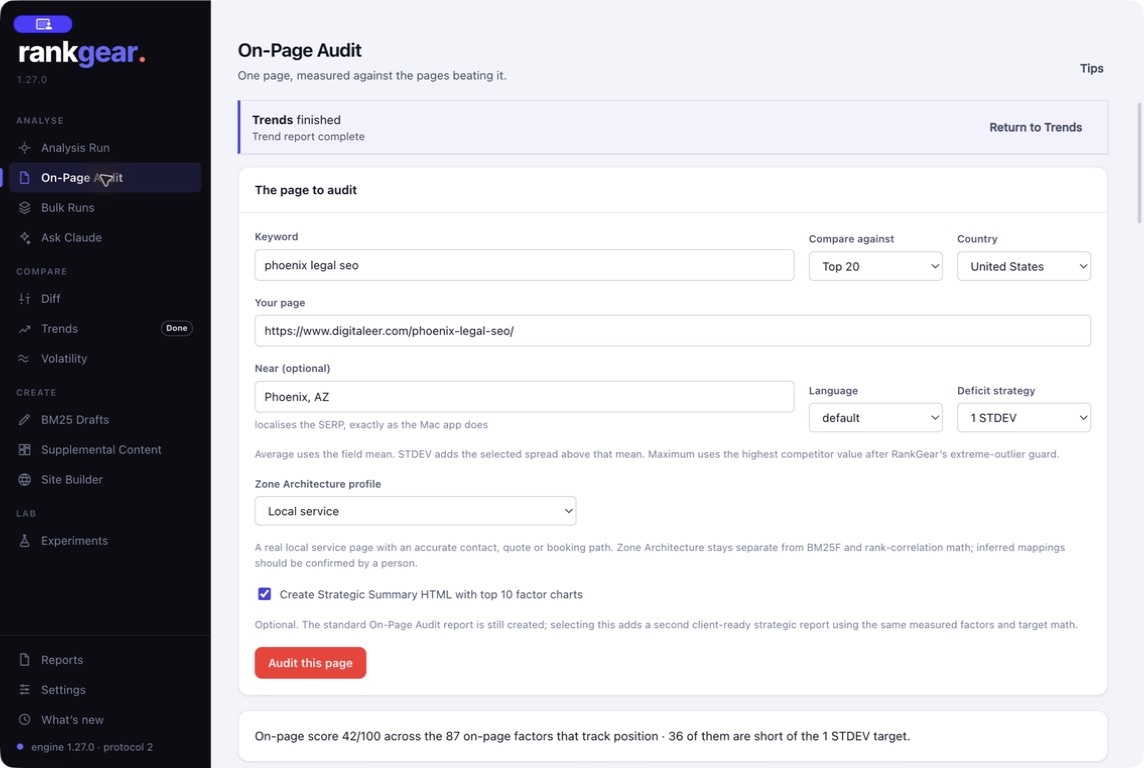
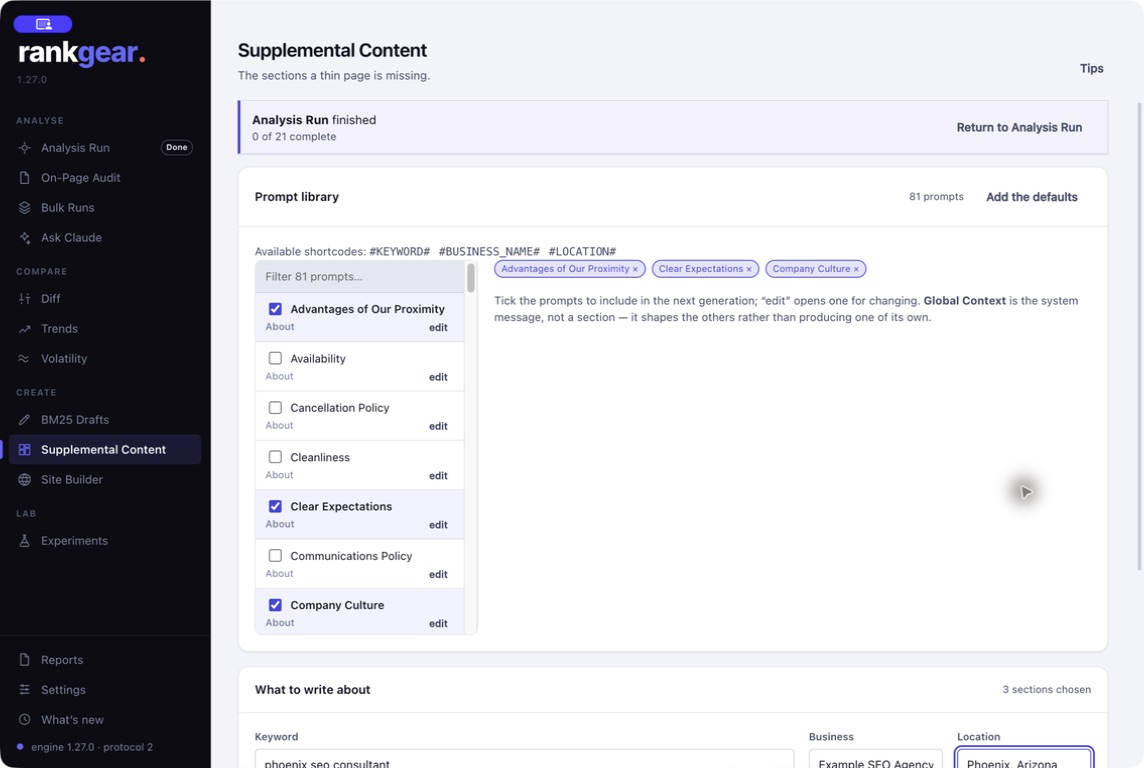
Software that surfaces SEO correlation data for specific queries changes the game because it removes the guesswork of applying broad studies to narrow problems. RankGear, for example, analyzes ranking factors for the exact terms you care about. That lets you see whether things like keyword difficulty, backlinks, or topic clusters actually correlate with top positions for your terms, not for some hypothetical average query.
When I started using query-level correlation analysis, I stopped wasting time on factors that mattered in general but not for my specific situation. I also caught opportunities I would have missed. One client in the SaaS space was struggling to rank despite strong domain authority. The correlation data showed that pages with rich SERP features and clear answer snippets dominated their target terms. We shifted focus to structured data and direct answers. Rankings improved within weeks.
That kind of precision is what makes correlation data useful. Without it, you are swimming in a sea of general advice. With it, you have a map of what might work for your actual pages.
Correlation Data in a Machine Learning World
Google's ranking system now relies heavily on machine learning. RankBrain and other models process hundreds of signals and weigh them dynamically based on the query. That makes correlation analysis harder because the same signal can carry different weight for different searches. A backlink profile that correlates strongly for product queries might barely register for local searches.
This complexity is exactly why we need better correlation tools, not fewer. Static lists of ranking factors are becoming less useful. Query-level analysis that accounts for search intent and SERP features is the only way to keep up. If you ignore this shift, you will optimize for signals that Google's models have already deprioritized.
I have found that combining correlation data with actual traffic data from Google Search Console gives me a clearer picture. When I see a strong correlation but weak performance, I dig into user behavior. Often the answer is that the correlation is real but the page does not satisfy the searcher. That gap is where real optimization happens.
Final Thoughts on Using SEO Correlation Data Well
SEO correlation data is a tool, not a truth. It points you toward patterns worth investigating, but it cannot tell you what will work for your site. The best practitioners treat it as one input among many, alongside competitor analysis, user research, and controlled experiments.
I still check correlation studies when they come out. I still run my own analyses using tools like RankGear. But I no longer treat the numbers as final. I use them to form better questions. And that shift, more than any single factor, has improved my results more than any correlation chart ever could.